
Should a Tenant Pay their Water Bills in Massachusetts?
Reading Time: 4 minutes Are you curious if your tenants should pay the water utilities for your property in Massachusetts? In this article, we will be covering that most commonly asked question by most landlords. Is it possible for tenants to pay water bills? In a condo association, water bills are included. However, if you do…
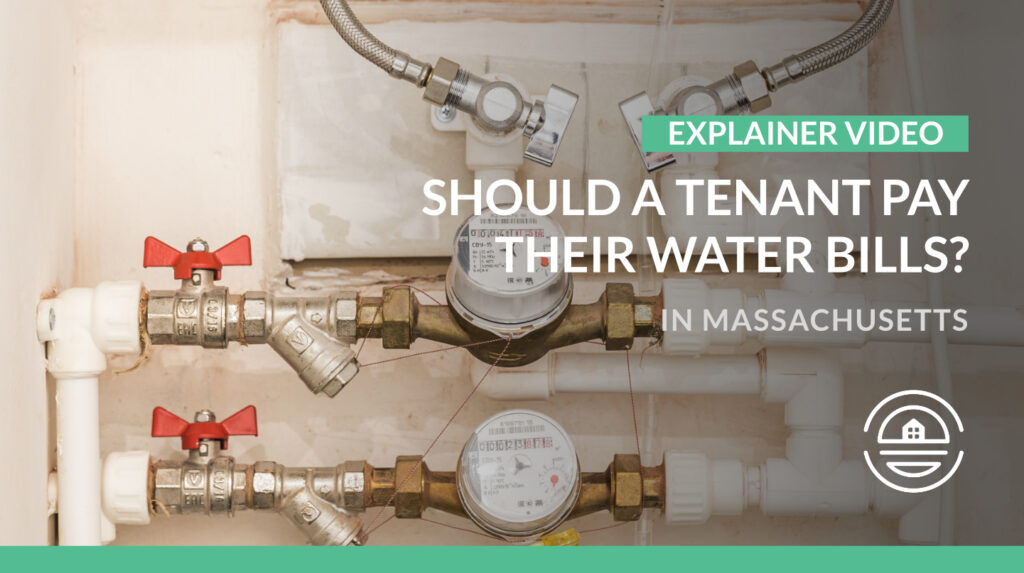
Are you curious if your tenants should pay the water utilities for your property in Massachusetts? In this article, we will be covering that most commonly asked question by most landlords.
Table of Contents
Is it possible for tenants to pay water bills?

Photo from Michael Burrows of Pexels
In a condo association, water bills are included. However, if you do have a single or a multi-family, this is something that you’re going to want to consider because water can be a major expense. When the tenants aren’t paying for that expense, they aren’t going to be worried about it.
What’s the process for a single-family house?

Photo from Mikhail Nilov of Pexels
Any type of utility that you want to charge back to the tenant needs to be separately metered. A single-family house has only one meter. Sometimes, there’s a different line for sprinklers, but that’s not the case since the city of Boston, or the jurisdiction or city you have a property in, might have a special form. That form needs to be filled out by the plumber. The plumber will go to the property and make sure everything is low flow and efficient. They will sign it, stating what it is then you will need to submit the form to the city.
Do you need a written rental agreement for separate water billing?
Yes, having a written rental agreement is essential if you want to charge tenants for water separately. This agreement should be clearly signed by both you and your tenant. It must outline the tenant’s responsibility for the water bill, how those charges will appear, and the method for making payments.
Be sure that all terms related to water billing are spelled out in plain language. This avoids confusion and ensures everyone is on the same page. Without a written agreement, you can’t legally require the tenant to pay the water bill, no matter how clear the verbal understanding is.
Does the tenancy start date matter?
Absolutely—it’s a key detail. In Massachusetts, you can only bill tenants separately for water if their tenancy began on or after March 16, 2005. If a lease started before that date, even if you want to, you’re not allowed to start charging them individually for water. This cutoff is set by state law, so there’s no wiggle room on this one. If your tenants moved in after this date, and the property is set up correctly, you can proceed with charging for water as long as you follow the proper process.
Once you have the receipt, make sure you provide a copy of that report to the tenants. In case you charge the water bill and weren’t able to submit the form, you will be legally responsible for up to triple damage. We’ve seen that happen with other landlords that didn’t do this, causing almost tens of thousands of dollars.
The water bills in Boston stay in the owner’s name. We’ll pay that water bill and add it back to the tenant ledger. We will provide a copy of the bill, but we can’t put it in the tenants’ names. It is a little bit more work but again, for a single-family house, you must fill out the form together with a plumber, get the bills, have it paid then add it to the tenant’s ledger.
What needs to be in the rental agreement for water billing?
Before you start billing tenants for water, your rental agreement needs to cover a few key points. To stay compliant and keep everyone on the same page, make sure your lease or rental contract:
- Clearly states that tenants are responsible for paying the water bill.
- Explains how the water charges will be calculated and how tenants will receive their portion of the bill.
- Outlines the payment method and process—how, when, and to whom tenants should pay for water.
Both you and your tenants should sign this agreement, so there’s never any confusion down the road. Having it in writing protects you and keeps expectations clear for everyone.
How about for multi-families?

Photo from Mikhail Nilov of Pexels
If you have four units in a building, the majority of landlords unless it’s a new construction building don’t have separate water meters. Your water bills could range anywhere between $50-100 per month per unit. At Green Ocean, we work with a vendor that can put a single meter reader. They’re going to add separate water meters for every unit, assuming that your water is separated per unit.
You also need to have the lines checked by a plumber. Each meter will read separately and it’s going to send information back to the individual reader. This individual reader will send us information via online, so we’re able to figure out the cost based upon the calculation. If it’s a $500 water bill for the entire building, we’ll separate that and figure out the total amount for each unit. We will bill it back to the tenants and give them a proof of billing.
In addition, you need to explain how it works because you don’t want any type of confusion. This can save you at least $6,000-7,000 per year. The key is to make sure that everybody understands their responsibility of paying the water, and they understand how it works without any confusion.
If you’re looking for a property manager that is proactive and can think of different ways to save you money, please think of Green Ocean Property Management, where you get more than a property manager, you get peace of mind.

Best Practices for both Landlords and Property Managers
Reading Time: 2 minutesReading Time: 2 minutes Property managers and landlords play a huge role in the real estate industry. Both are key players in making sure that the property and the tenants are well taken care of. These two require two important things: transparency and communication. Both are dealing with a property worth hundreds of…

8 Ways Property Owners Can Enhance the Resident Experience
Reading Time: 3 minutesProperty owners face the ongoing challenge of maintaining high resident satisfaction and retention rates. Poor resident experiences can lead to negative reviews and increased turnover, both of which can significantly impact a property’s profitability. To address these issues, here are eight proven strategies that can transform the resident experience and boost overall satisfaction. 1….
We Fix Chimneys too!
Reading Time: < 1 minute In the video above, you can see that Jarrett Lau is up on the roof. Last Saturday morning, we had a little issue with the chimney that deteriorated out. Masonry is really important to check it all the time so you can avoid these types of issues, especially if it looks worse than…
Experience exceptional management and elevate your property with us