
Passive Income Strategies for Millennials: Why Rental Properties Are a Smart Investment
In an era where financial independence is a coveted goal, millennials are seeking innovative ways to build wealth and secure their futures. One such avenue gaining traction is passive income, offering the promise of financial stability and freedom. This article delves into the realm of passive income, specifically focusing on the benefits of rental property…

In an era where financial independence is a coveted goal, millennials are seeking innovative ways to build wealth and secure their futures. One such avenue gaining traction is passive income, offering the promise of financial stability and freedom.
This article delves into the realm of passive income, specifically focusing on the benefits of rental property investment as a smart strategy for millennials.
Table of Contents
Why Millennials Should Consider Rental Property Investment
Rental property investment holds a unique appeal for millennials, offering a pathway to long-term wealth accumulation and income stability. With the potential for appreciation in property value and steady rental income, real estate presents an attractive investment opportunity for this demographic seeking financial security amidst economic uncertainty.
In today’s market, rising rents and increasing property values can translate into a reliable income stream and meaningful equity growth over time. For many millennials, purchasing a home or apartment to rent to qualified tenants makes it possible to generate passive income while building assets for the future. The average rent in many cities is substantial—often reaching several thousand dollars per month—making rental properties an appealing source of supplemental cash flow.
Additionally, creative investment strategies, such as purchasing undervalued or foreclosed properties and renovating them for resale or rental, can yield significant returns. However, it’s not just about buying and holding; effective property management plays a key role in maximizing returns and minimizing risk. Whether you choose to manage the property yourself or hire a professional, regular maintenance and responsive tenant management help safeguard your investment’s value and ensure a smoother ownership experience.
By leveraging these opportunities, millennials can take significant steps toward financial independence, all while navigating the unique challenges and benefits of real estate investing.
Despite its allure, real estate investment is often shrouded in myths and misconceptions that deter millennials from exploring this wealth-building avenue. Addressing these misconceptions is essential to provide clarity on the benefits and challenges of rental property ownership, empowering millennials to make informed investment decisions.
Assessing Millennials’ Investment Goals and Risk Appetite

Millennials exhibit a diverse range of investment goals and risk appetites shaped by their unique financial circumstances, experiences, and attitudes toward money. Understanding these factors is crucial for financial advisors and investment professionals to offer tailored advice and solutions.
Here’s a breakdown of common investment goals and risk considerations among millennials:
1. Financial Goals
Many millennials are driven by the desire to build wealth over the long term, aiming to achieve financial security and fund major life milestones like buying a home or starting a family. Additionally, securing a comfortable retirement is a common goal among this demographic. With a focus on achieving financial independence, millennials naturally gravitate towards investment strategies that offer consistent passive income streams to supplement their primary sources of earnings.
Millennials also often emphasize the importance of diversifying their investment portfolios to spread risk and take advantage of various asset classes’ potential returns. Additionally, an increasing number of millennials prioritize investing in socially and environmentally responsible companies or funds that resonate with their values and contribute to positive societal impact.
2. Risk Appetite
Risk tolerance varies widely among millennials, influenced by factors such as income stability, debt levels, investment knowledge, and personal experiences (e.g., witnessing the 2008 financial crisis).
Generally, millennials are often perceived as more risk-tolerant than older generations, willing to embrace higher levels of risk in pursuit of potentially higher returns. However, risk tolerance is not uniform across the demographic; some millennials may exhibit conservative tendencies, prioritizing capital preservation and stability over aggressive growth.
Exploring Rental Property Investment Strategies
Diving into the nuances of rental property investment, millennials can explore various strategies tailored to their preferences and goals. Whether opting for long-term rentals, Airbnb properties, or multi-family units, each strategy comes with its own set of advantages and considerations, requiring careful evaluation.
The Importance of Researching Investment Strategies
A clear understanding of various investment strategies is essential for millennials navigating Boston’s dynamic real estate market. The city’s high average rents and rapidly evolving neighborhoods present both significant opportunities and unique challenges for new investors.
By thoroughly researching and comparing different approaches—such as traditional buy-and-hold rentals, short-term leasing, or even fix-and-flip projects—millennials can identify which tactics best match their financial objectives and risk tolerances. For instance, purchasing a multi-family property in Allston for long-term rental income will carry different potential yields and responsibilities compared to a fix-and-flip venture in Dorchester.
Being well-versed in these strategies helps investors evaluate market conditions, anticipate expenses, and position their ventures for maximum profitability. Additionally, informed decision-making can help avoid common pitfalls, such as underestimating renovation costs or misjudging tenant demand in specific neighborhoods.
Ultimately, diligent research empowers millennials to tailor their real estate journey—balancing risk and reward while building a resilient portfolio that aligns with individual goals.
The Importance of Reviewing the Boston Real Estate Market
Carefully reviewing the Boston real estate market is a vital first step before making any rental property investment. Boston’s dynamic landscape—marked by rapidly shifting neighborhood trends, fluctuating property values, and emerging hotspots—means that today’s most promising area might not hold the same appeal tomorrow. Markets like Charlestown, Dorchester, Chelsea, and East Boston can change quickly, so staying current is essential for maximizing your returns and avoiding costly missteps.
Thorough market analysis allows millennials to identify which property types—single-family homes, condos, or multi-family units—best align with their investment goals and risk tolerance. Utilizing resources such as Zillow, Realtor.com, and the FNC Residential Price Index can provide up-to-date insight into recent sales, price movements, and neighborhood trajectories.
By taking the time to assess local trends and comparing long-term data, investors can make more informed decisions, spot potential growth areas, and better anticipate shifts in demand. This diligence reduces the risk of overpaying in overheated markets or missing out on emerging opportunities that could yield significant future value. Ultimately, a strategic approach to market research empowers millennials to build portfolios rooted in both stability and growth potential.
Long-term rentals
Investing in traditional long-term rental properties can offer stable, predictable rental income streams and potential appreciation in property value over time. This strategy may appeal to millennials seeking steady passive income and wealth accumulation.
One of the most popular approaches is purchasing a residential property and renting it out to qualified tenants, effectively allowing you to generate passive income as a landlord. In many urban markets, monthly rents can be substantial—often averaging just under $4,000—which means the potential for significant side income is real. By securing reliable tenants and managing the property efficiently, investors can benefit not only from regular monthly cash flow but also from long-term growth as the property appreciates in value.
This path is particularly attractive for those prioritizing consistency and aiming to build wealth over time without the volatility of more speculative investments.
Airbnb properties
Short-term rental properties through platforms like Airbnb can provide higher rental yields but may entail more management effort and variability in occupancy rates. Millennials attracted to entrepreneurship and technology may find this strategy appealing but should be mindful of regulatory risks and seasonal demand fluctuations.
Multi-family units
Investing in multi-family properties can provide economies of scale, diversification across multiple rental units, and potentially higher cash flow compared to single-family homes. This strategy may suit millennials aiming for larger-scale income generation and portfolio diversification.
Fix-and-flip strategies
Another popular investment approach for millennials is the fix-and-flip model. This involves purchasing a property—often one that is distressed, abandoned, or foreclosed—at a below-market price, investing in renovations and improvements, and then selling the upgraded home for a profit. This strategy can be highly lucrative, especially in markets with strong demand for updated housing, but it also carries higher risks and requires a significant upfront investment of time, knowledge, and capital. Success in this area often hinges on accurately estimating renovation costs, understanding local real estate trends, and moving quickly to capitalize on market opportunities.
By understanding and carefully weighing these diverse strategies, millennials can align their real estate investments with their unique financial goals, risk tolerance, and lifestyle preferences, setting the stage for long-term wealth-building and financial independence.
Calculating ROI and Cash Flow for Residential Real Estate Investments
Understanding how to assess the financial performance of a rental property is key for millennials eager to make smart, informed investment decisions. Two crucial metrics—Return on Investment (ROI) and cash flow—form the backbone of evaluating a property’s earning potential.
Cash Flow
Cash flow represents the net income you receive from your rental property each month after accounting for all costs. To calculate it:
- Start with the total monthly rental income.
- Subtract all recurring expenses:
- Mortgage payments
- Property taxes
- Insurance premiums
- Homeowner association (HOA) fees, if applicable
- Routine maintenance
- Property management fees (if you hire help)
A positive cash flow means your income exceeds your expenses, providing extra funds and reducing the risk of financial stress. Negative cash flow, on the other hand, signals that costs outpace rental income—something most investors aim to avoid.
Return on Investment (ROI)
ROI measures the profitability of your investment, helping you compare different properties or investment strategies. To calculate ROI for a residential property:
- Determine annual net income:
- Multiply your monthly cash flow by 12.
- Calculate your total initial investment:
- Include the down payment, closing costs, and any upfront repairs or improvements.
- Calculate ROI:
- ROI = (Annual Net Income ÷ Total Initial Investment) × 100
For example, if you invest $40,000 upfront and your property generates $4,000 in annual net income, your ROI would be 10%.
Tips for Accurate Calculations
- Don’t forget occasional expenses, like major repairs or vacancies, when forecasting cash flow.
- Online calculators from trusted sources like BiggerPockets can help streamline your calculations.
- Consulting with a real estate-savvy accountant or investment advisor is wise, especially if you’re new to these numbers.
By carefully evaluating cash flow and ROI before purchasing, millennials can choose properties that align with their goal of long-term financial independence—combining solid returns with manageable risk.
The Value of Partnering with a Local Real Estate Agency
When it comes to pinpointing lucrative rental property opportunities in Boston, teaming up with a local, independent real estate agency can make all the difference. Local agencies bring an insider’s perspective to the table—they understand the city’s diverse neighborhoods, emerging development hotspots, and the subtle trends that might not show up on national reports like the FNC Residential Price Index.
Here’s how working with a Boston-based agency can give millennials a competitive advantage:
- Hyperlocal Market Insight: Local agents track block-by-block shifts in demand and supply, helping clients spot hidden gems before they hit larger market radars.
- Access to Off-Market Listings: Independent agencies often have access to exclusive or off-market properties that aren’t listed on big national platforms.
- Personalized Guidance: Agents can offer tailored advice that takes into account the investor’s goals, preferred neighborhoods, and budget, making recommendations based on real-time data and recent sales activity.
- Network Benefits: Established agencies maintain relationships with property managers, contractors, and financial professionals in the city, streamlining everything from property evaluation to renovations and tenant selection.
Ultimately, partnering with local experts increases the odds of identifying Boston properties with strong cash flow potential and long-term value appreciation, all while navigating the unique nuances of the city’s real estate market.
Leveraging Online Tools for Boston Real Estate Analysis
For millennials looking to analyze market trends and property values in Boston, an array of online platforms can provide valuable insights. National real estate websites, such as Zillow and Realtor.com, offer comprehensive data on home sales, historical price fluctuations, and neighborhood comparables—enabling prospective investors to assess which areas are primed for growth.
Additionally, industry indices like the FNC Residential Price Index deliver regularly updated market statistics, helping investors track the latest shifts in Boston’s real estate landscape. Utilizing these digital tools makes it easier to identify promising neighborhoods, compare investment opportunities, and stay current with prevailing property trends, all from the convenience of your laptop or smartphone.
Financing Options for Millennials Interested in Real Estate Investment

Securing financing is often a hurdle for millennials venturing into real estate investment. However, a myriad of options exists, including traditional mortgage loans, FHA loans, and innovative financing alternatives tailored to the needs of this demographic.
Comparing Mortgage Rates Online
For millennials evaluating their financing options, leveraging online rate comparison platforms can streamline the process of finding the best mortgage terms. Resources like NerdWallet (https://www.nerdwallet.com/) and LendingTree (https://www.lendingtree.com/) allow prospective investors to easily compare mortgage rates from a variety of lenders, all in one convenient place. By inputting some basic financial information, users can quickly review current rates, lender offers, and estimated monthly payments—making it easier to identify competitive loan options that match their financial profile and investment strategy.
Taking time to explore these tools empowers millennials to make informed decisions and maximize their chances of securing favorable financing for their real estate investments.
1. Traditional Mortgage Loans
Millennials can apply for conventional mortgage loans from banks and financial institutions to finance their real estate investments. These loans typically require a down payment, good credit history, and stable income. Conventional mortgages offer competitive interest rates and terms, making them suitable for millennials with strong financial profiles and the ability to meet stringent lending criteria.
For those considering this route, it’s worth noting that the interest rate you’ll receive will depend on both current market conditions and your individual credit rating. To secure the most favorable terms, it’s a smart move to shop around and compare offers from different lenders. Online platforms like NerdWallet and LendingTree can simplify this process, allowing you to view and evaluate rates side by side, ultimately saving time and potentially reducing your long-term costs.
2. FHA Loans
Federal Housing Administration (FHA) loans are government-backed mortgage loans designed to help first-time homebuyers and individuals with limited down payment funds or lower credit scores. FHA loans require a lower down payment (typically 3.5% of the purchase price) and more lenient credit requirements compared to conventional loans, making them accessible to millennials with less established credit histories or limited savings.
3. Innovative Financing Alternatives
Millennials can explore alternative financing options tailored to their needs, such as:
- Seller financing: Involves the property seller providing financing directly to the buyer, bypassing traditional lenders. This option may be beneficial for millennials facing challenges with securing conventional financing or seeking flexible terms.
- Peer-to-peer lending: Platforms like Prosper and LendingClub connect borrowers with individual investors willing to fund real estate projects. Peer-to-peer lending offers an alternative source of financing with potentially competitive interest rates and more flexible qualification criteria.
- Self-directed IRA accounts: For those with existing retirement savings, a self-directed IRA can allow millennials to invest in real estate directly, tapping into their retirement funds for property purchases.
- Crowdfunding and P2P options: These methods enable investors to pool resources with others, either borrowing or investing collectively in real estate opportunities, sometimes resulting in lower interest rates or easier qualification processes compared to traditional banks.
By considering these innovative financing methods, millennials can overcome common barriers such as strict lending requirements or limited upfront capital, making real estate investment more accessible and adaptable to their financial situations.
The Importance of Consulting Financial Professionals
Before diving into a real estate purchase, consulting with a qualified accountant or investment consultant is a wise move—especially for millennials navigating their first investments. These professionals can help you assess the true costs involved, from upfront expenses like down payments and closing fees to ongoing costs such as maintenance, property taxes, and insurance.
Their expertise ensures your cash flow projections are realistic, helping you avoid unexpected financial pitfalls and better evaluate whether a prospective property will actually deliver a healthy return. Additionally, a financial consultant can identify tax benefits and deductions you may overlook, while also advising on the best strategies to maximize your investment. Although hiring an expert is an added expense, their guidance often helps investors make more informed decisions and avoid costly mistakes in the long run.
Initial and Ongoing Costs to Consider When Purchasing Residential Real Estate in Boston
A thorough understanding of the financial commitments involved is essential for millennials investing in Boston’s residential real estate. Before purchasing, it’s important to budget for several initial costs:
- Down payment: Typically ranging from 3% (with FHA loans) to 20% of the property’s purchase price, depending on the financing option and lender requirements.
- Closing costs: These can include lender fees, attorney fees, title insurance, and appraisal fees, often amounting to 2-5% of the purchase price.
- Home improvements or repairs: Many properties, particularly older Boston homes, may require renovations or upgrades before they’re tenant-ready.
- Reserve funds: Lenders may require reserves—extra savings set aside—as a financial cushion to cover mortgage payments in case of emergencies.
Once you own the property, several recurring expenses will factor into your ongoing budget:
- Mortgage payments: Monthly payments covering principal and interest if you finance the purchase.
- Property taxes: Boston property taxes can vary, so plan accordingly based on the local tax rate and any potential abatements.
- Homeowner association (HOA) fees: Condos and some single-family homes in the city may have HOA dues; these contribute to shared amenities and maintenance.
- Insurance: Property insurance, and possibly additional policies like landlord or flood insurance, to protect your investment.
- Maintenance and repairs: Routine upkeep—from snow removal to HVAC servicing—as well as unexpected repairs, ensuring the property remains safe and attractive to tenants.
Carefully planning for both upfront and ongoing costs helps maintain healthy cash flow, reducing financial stress and positioning you for long-term success as a real estate investor in Boston.
Tips for Successful Rental Property Investment

Armed with insights and knowledge, millennials can embark on their rental property investment journey equipped with practical tips for success. From selecting the right location to implementing effective property management practices and conducting thorough tenant screenings, attention to detail is key in maximizing returns and mitigating risks.
Key Steps to Planning a Successful Residential Real Estate Investment in Boston
Navigating Boston’s dynamic real estate market requires a clear, strategic plan—especially for millennials looking to maximize returns and minimize risk. Here’s a practical step-by-step guide to ensure your property investment journey starts off on solid ground:
1. Define Your Investment Strategy
Start by clarifying your investment objectives. Are you aiming for stable, long-term rental income, or are you interested in pursuing short-term gains through fix-and-flip opportunities? Each path requires a different mindset, timeframe, and risk tolerance. For instance:
- Buy and Hold: Focuses on purchasing properties to rent out, generating consistent monthly cash flow and long-term appreciation.
- Fix and Flip: Involves buying properties in need of renovation, improving them, and selling for a profit—an approach that thrives in neighborhoods on the rise.
Identifying which strategy aligns with your goals will inform every subsequent decision.
2. Analyze the Local Market
A thorough understanding of the Boston real estate landscape is crucial. Dive into recent sales data on platforms such as Zillow and Realtor.com to track trends in various neighborhoods including hot spots like Charlestown, Dorchester, Chelsea, and East Boston. Look for:
- Historic price appreciation and rent growth
- Proximity to major employers, public transit, and popular amenities
- Neighborhood development plans that may indicate future growth
The more data you gather, the better equipped you’ll be to identify promising investment opportunities.
3. Assess Financial Feasibility
Before diving in, crunch the numbers. Account for all up-front and ongoing costs, including:
- Down payment and closing costs
- Loan payments, property taxes, and insurance
- Maintenance, repairs, and HOA fees (if applicable)
To ensure positive cash flow, compare anticipated rental income to all expenses—don’t forget to include a reserve for unexpected costs. Consider enlisting an accountant or financial advisor to help project your return on investment (ROI) and cash flow, ensuring your numbers stack up before committing capital.
4. Explore Financing Solutions
Survey a range of financing options—from traditional mortgages offered by banks and credit unions, to FHA loans tailored for first-time buyers. Use resources like NerdWallet and LendingTree to compare rates and terms, and weigh the pros and cons of:
- Fixed vs. Variable-rate loans
- Self-directed IRA accounts for real estate investing
- Peer-to-peer lending platforms, which may offer friendlier qualification criteria and rates
Securing the right financing can give you a critical edge in Boston’s competitive market.
5. Plan for Professional Property Management
Owning an investment property comes with responsibilities—tenant relations, routine maintenance, and compliance with local regulations. Many investors find it worthwhile to partner with a property management company to:
- Handle tenant screening and lease agreements
- Oversee repairs and regular upkeep
- Respond promptly to tenant concerns
While this will involve additional fees, effective property management can help protect your investment and deliver peace of mind.
By following these key steps—defining a strategy, understanding the local market, running the numbers, organizing financing, and planning for ongoing management—you’ll be well prepared to make informed decisions and set your Boston investment up for lasting success.
1. Location Selection
Research and choose investment properties in desirable locations with strong rental demand, good schools, amenities, and potential for appreciation. Consider factors such as proximity to transportation hubs, employment centers, and recreational areas when selecting rental properties.
2. Effective Property Management
Implement efficient property management practices to ensure smooth operations and maximize returns. Maintain the property in good condition, promptly address maintenance issues, and respond to tenant inquiries and concerns on time.
Managing a rental property involves much more than just collecting monthly rent. You’ll be responsible for routine upkeep, tenant communication, and handling unexpected repairs. Staying proactive with maintenance—like regular inspections and fixing small issues before they escalate—can help preserve your property’s value and keep tenants satisfied.
For those who prefer a hands-off approach or are investing from a distance, hiring a reputable property management company can be a smart move. A good property manager can oversee day-to-day operations, source reliable tenants, and handle maintenance efficiently. Although this comes with a fee, the peace of mind and time savings can be well worth the investment, especially as your portfolio grows.
3. Thorough Tenant Screenings
Conduct comprehensive background checks, including credit history, rental history, employment verification, and criminal background checks, to screen potential tenants. Select tenants who demonstrate a reliable payment history, stable income, and a positive rental track record. This minimizes the risk of late payments or property damage.
4. Leverage Technology
With the emergence of real estate crowdfunding platforms, online property management tools, and innovative software solutions, millennials can harness the power of technology to streamline their investment endeavors.
Conclusion
Rental property investment stands as a compelling avenue for millennials to unlock financial freedom and secure their futures. By following the guide above, young professionals can embark on a rewarding journey toward financial independence through real estate investment.
Millennials, ready to invest smartly? Partner with Green Ocean Property Management for expert guidance on passive income strategies through rental properties. Secure your financial future today!

How to Find and Manage a Boston Property Services Provider
Owning property in Boston can feel like a full-time job. From leaky faucets to broken heaters, every maintenance issue seems to require another service call and more of your valuable time. But it doesn’t have to be this way. What if you had a team of trusted property service experts ready to tackle any…
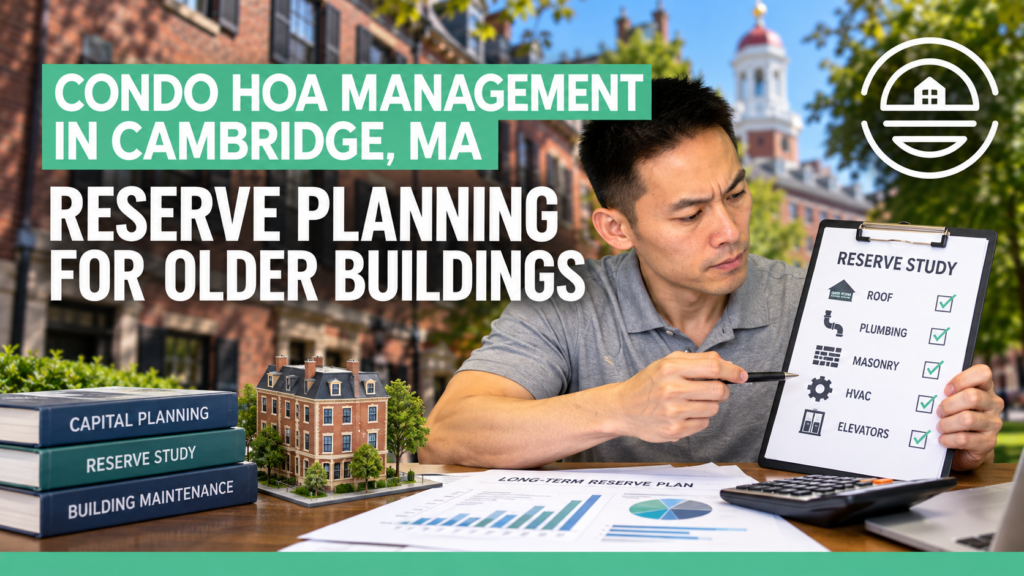
Condo HOA Management in Cambridge, MA: Reserve Planning for Older Buildings
Cambridge condo associations deal with two things most Massachusetts boards don’t: a housing stock that includes a lot of older, pre-condo-conversion buildings, and a rental market shaped heavily by Harvard and MIT. If you’re a trustee here, both of those affect what your reserve fund and your governing documents need to cover. Older buildings mean…

Flipping Vs. Renting: Which Real Estate Strategy is Best for Long-term Gains?
Are you considering investing in real estate but find yourself at a crossroads? You’re not alone. Many aspiring investors grapple with the decision between flipping properties and becoming a landlord. Both strategies have their advantages and challenges, but which one is truly the best choice when it comes to long-term gains? Let’s look through both…
Experience exceptional management and elevate your property with us