
Tax Preparation and 1099 Services for Property Owners
For property owners in Boston and Greater Boston, understanding tax preparation and 1099 services is crucial. This guide provides an overview of the essential tax forms, filing requirements, and important deadlines to ensure compliance and maximize your tax deductions. Understanding 1099 Forms Navigating the complexities of tax season can be daunting for property owners,…
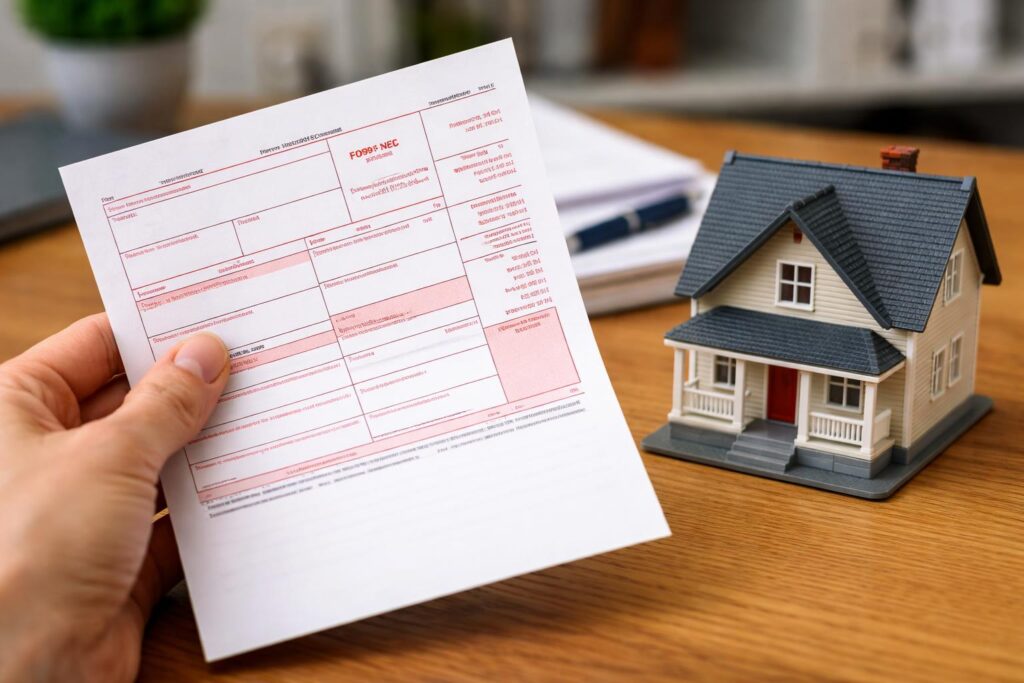
For property owners in Boston and Greater Boston, understanding tax preparation and 1099 services is crucial. This guide provides an overview of the essential tax forms, filing requirements, and important deadlines to ensure compliance and maximize your tax deductions.
Table of Contents
Understanding 1099 Forms
Navigating the complexities of tax season can be daunting for property owners, but a tax preparer can offer valuable assistance in managing your tax situation. clear understanding of 1099 forms is fundamental. These information return documents are vital for reporting payments made to non-employees, ensuring transparency and proper financial tracking for your rental properties.
What are 1099 Forms?
The 1099 tax form serves as a critical document to report payments for services rendered to the IRS. critical information return that meticulously documents payments made to non-employees, such as independent contractors and various service providers. These forms are instrumental in demonstrating that your rental activity is a legitimate trade or business, thereby strengthening your position with the IRS. By accurately documenting contractor payments, these forms provide robust audit protection and substantiate your expense deductions when matched against your annual tax return, which can be crucial for your tax preparer.
Types of 1099 Forms
Several types of 1099 tax forms exist, each designed for specific reporting requirements. These include forms for nonemployee compensation, miscellaneous income, and transactions processed by payment companies, as well as those for payments to nonresident aliens.
| Form Type | Primary Use: This form is essential to report payments for services rendered. |
| Form 1099-NEC | Reports nonemployee compensation (e.g., payments to independent contractors for services rendered, particularly when payments exceed $600 in a tax year). |
| Form 1099-MISC | Reports miscellaneous income, including rent payments made by property management companies to property owners or royalties. |
| Form 1099-K | Issued by payment processors for transactions exceeding certain thresholds. |
| Form 1042-S | Reports nonemployee compensation paid to nonresident aliens. |
Who Needs to File 1099s?
The IRS generally requires businesses to file Form 1099-NEC for certain payments made during the tax year, and failure to file these forms can result in penalties. This rule applies to landlords and property management companies operating as a trade or business. If you hire an independent contractor or a small business that is not a corporation and pay them $600 or more, you are typically required to issue a 1099-NEC. There are, however, specific exemptions from this requirement:
| Condition | 1099-NEC Requirement |
| Payment of $600 or more for services to a person or unincorporated business | Required |
| Vendor is a corporation (C-corp or S-corp) | Exempt (unless for specific legal or medical services) |
| Payments made via credit card or payment apps | Exempt (reported by processor on Form 1099-K) indicates that certain payments may not require withholding. |
Tax Preparation for Property Owners
Effective tax preparation is not just about avoiding penalties; it’s about leveraging every opportunity to benefit your rental property business. For property owners in Boston, strategic tax planning ensures compliance and unlocks valuable deductions.
Importance of Tax Preparation
Proper tax preparation is not merely a compliance task; it is a strategic imperative for property owners. Beyond averting IRS penalties, accurate tax filing establishes your rental activity as a legitimate trade or business, a distinction crucial for accessing significant federal tax benefits, such as the 20% pass-through deduction under Section 199A. This deduction can substantially reduce your taxable income. Meticulous tax preparation ensures you stay ahead of the IRS matching process, safeguarding your business from potential scrutiny and validating your financial operations as a serious enterprise.
Steps in Tax Preparation
Effective tax preparation for property owners involves a structured approach. Initially, before engaging any contractor or service provider, always request a completed W-9 form to gather their essential taxpayer information. Throughout the tax year, meticulously track all payments made to each vendor, differentiating between checks, ACH transfers, cash payments, and those processed through credit cards or PayPal. By the close of January, accurately input each contractor’s details into an online filing platform to prepare and submit Form 1099-NEC by the strict deadline to avoid any failure to file these forms. For those aiming to utilize the Safe Harbor Method, maintaining separate, contemporaneous records for all services performed is essential.
Common Tax Deductions for Property Owners
Property owners have access to several common tax deductions that can significantly reduce their taxable income. Notably, the Qualified Business Income (QBI) rules allow a deduction of up to 20% of the net income generated from rental properties, provided certain criteria are met, which is a substantial benefit for many self-employed individuals and small business owners. Additionally, various operational expenses related to the rental property may be deductible business expenses, emphasizing the importance of detailed record-keeping for every tax year.
| Deduction Type: Understanding the different deduction types can help maximize your tax benefits when filing forms 1099. | Details |
| Qualified Business Income (QBI) | Up to 20% of net income from rental properties, provided criteria are met. |
| Operational Expenses | Repair costs, management fees, certain medical services for tenant injuries. |
Filing 1099 Forms
Accurate and timely filing of 1099 forms is paramount for property owners to avoid penalties and ensure compliance with IRS regulations. Understanding the how-to, when, and what-not-to-do is key for a smooth tax season.
How to File a 1099
To properly file Form 1099-NEC, it is imperative that each service provider furnishes a signed W-9 form to your trade or business, providing their taxpayer identification number and certification. If you choose to file Forms 1099-NEC on paper, you must submit them alongside Form 1096, which acts as an Annual Summary and Transmittal of U.S. Information Returns. However, for those opting to file electronically, Form 1096 is not required. The IRS offers several electronic filing options, including the no-cost Information Returns Intake System (IRIS) Taxpayer Portal, which allows taxpayers to input data or upload a .csv file to create and submit Form 1099 series forms.
Filing Deadlines for 1099s
Adhering to the strict filing deadlines for 1099 forms is critical for property owners to avoid penalties. Form 1099-NEC, which reports nonemployee compensation, must be issued to recipients and filed with the IRS by January 31st of each year. This is a hard deadline, and extensions are generally not available for Form 1099-NEC. For those filing paper forms, if under 10 forms, the deadline for submission to the IRS is typically the end of February. However, if filing 10 or more forms, electronic filing is mandated by January 31st. Form 1099-MISC, used for other types of miscellaneous income, also requires sending to recipients by January 31st, but its filing deadline with the IRS is March 31st.
Common Mistakes to Avoid
Property owners and business owners frequently encounter common pitfalls when filing 1099 tax forms. A significant mistake is Failing to collect W-9 forms from independent contractors and service providers before making payments can lead to complications in your tax situation.; without this, accurate information for your 1099 is unattainable. Another frequent error is using the incorrect 1099 form, such as employing Form 1099-MISC for service payments instead of the appropriate Form 1099-NEC, which can lead to compliance issues. Missing the strict filing deadlines for 1099s is a common oversight that invariably incurs penalties. Furthermore, neglecting to retain copies of your filed forms, W-9s, and comprehensive payment records for at least four years is a critical mistake that can hinder audit defense and future tax preparations.
Using E-File for Tax Returns
Benefits of Filing Electronically
Electronic filing of your tax return through the IRS’s IRIS system offers significant advantages for property owners in Boston and Greater Boston. This free service helps reduce processing errors, which can delay your refund or lead to additional correspondence with the IRS, particularly when you need to file form 1099. It provides a secure and accurate way to submit your tax forms without needing special software, allowing taxpayers to file automatically for extensions, make corrections, and reduce the expenses linked to traditional paper filing, streamlining your tax preparation.
How to E-File Your 1099s
For property owners and small business owners in Boston, if you file 10 or more information returns, including Form 1099 series, Form 1042-S, and Form W-2, you are required to file them electronically. The IRS combines all forms for this count, so a mix of 1099-NEC and 1099-MISC forms could trigger this requirement. Electronic filing requires advance setup through the IRS IRIS system, so remember to apply for your Transmitter Control Code by mid-November, as processing can take up to 45 days for your tax year.
Tracking Your E-File Submission
After you file electronically, tracking your submission is a simple, yet crucial, step in the tax preparation process. Most electronic filing systems, including the IRS IRIS portal, provide immediate confirmation of receipt, giving you peace of mind that your forms 1099-NEC or 1099-MISC have been successfully submitted. This confirmation acts as vital proof of filing, which is essential for audit protection and demonstrates compliance with IRS regulations for your rental properties and independent contractor payments.
Property Tax Compliance in Boston
Understanding Local Tax Laws
Understanding local tax laws is fundamental for property owners and property managers in Boston and Greater Boston to ensure full compliance. Property tax compliance in Boston involves navigating specific local regulations that can differ significantly from federal guidelines. This includes understanding assessment methods, appealing property valuations, and recognizing various exemptions or abatements available to rental property owners, all of which directly impact your overall tax burden and financial planning for your trade or business.
Reporting Requirements for Property Managers
Property management companies play a crucial role in tax preparation for property owners in Boston, particularly concerning 1099 forms. If a property management company collects rent on behalf of property owners, they may need to issue Form 1099-MISC to report the gross rental income paid to each property owner. Additionally, these companies will send Form 1099-NEC for property management fees exceeding $600 to the independent contractor. This meticulous reporting ensures proper tax filing and transparency for all payments made in the tax year.
Resources for Property Tax Compliance
Navigating property tax compliance and 1099 reporting can be complex for rental property owners, but Numerous resources are available to assist with tax advice, especially during the preparation of forms 1099-MISC and 1099-NEC.. For specific inquiries regarding 1099 reporting, you can contact a tax advisor, such as Kerkering Barberio, for expert guidance. A blank W-9 form, essential for collecting taxpayer information from independent contractors and ensuring accurate 1099 tax forms, is readily available on the IRS website. Furthermore, services like WageFiling offer support for e-filing, bulk TIN checking, or general filing questions, ensuring your tax prep is seamless.
Conclusion
Summary of Key Points
In summary, understanding tax preparation and 1099 services is critical for property owners in Boston and Greater Boston to maintain compliance and optimize their financial outcomes. We’ve explored the different types of 1099 forms, the importance of accurate tax preparation, and the specific filing deadlines for forms 1099-NEC and 1099-MISC. Adhering to these guidelines, collecting W-9 forms, and utilizing electronic filing options like the IRS IRIS system are key to avoiding penalties and ensuring smooth tax filing, especially when filing forms 1099-MISC and 1099-NEC. for your rental properties and independent contractor payments.
Property Owners
Property owners should act now to prepare for upcoming tax and information filings. We suggest obtaining a W-9 form from every service provider before making any payments to that provider. Smart landlords print W-9 forms in advance and request completion before any work begins, as this is crucial for accurate 1099 tax forms. For those utilizing the Safe Harbor Method, start keeping separate, contemporaneous records for all services performed. If you intend to use the Alternative Facts and Circumstances Method, begin obtaining signed W-9 forms from each service provider to facilitate 2020 Form 1099-NEC reporting and ensure proper withholding where applicable. Collect W-9s before payments, track expenses consistently, and use technology to automate compliance. For comprehensive support in managing your rental properties and ensuring seamless tax preparation, reach out to Green Ocean Property Management today!
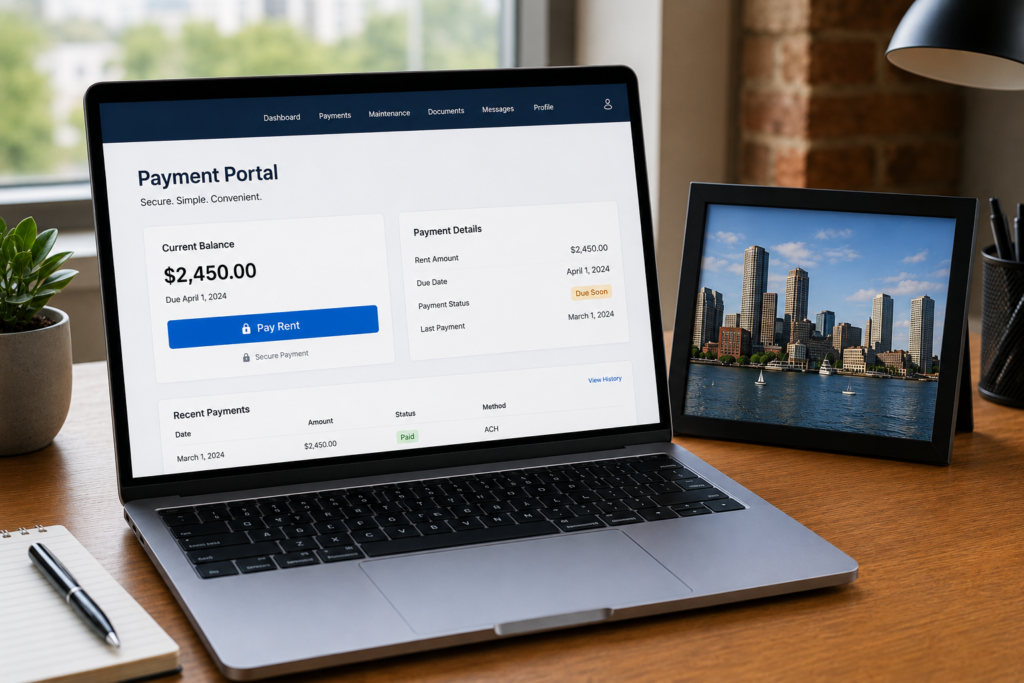
Online Payment and Owner Portal Solutions
Online payment portals Boston help owners and tenants pay rent online fast and safely. This guide explains how owner portal payments Greater Boston work, shows HOA online billing Boston basics for landlords and property managers., and shares links to accounting and rent collection pages. We keep language simple and clear. Understanding Online Payment Portals…
Experience exceptional management and elevate your property with us