
Real Estate Investment: A Comprehensive Guide
Reading Time: 11 minutesReal estate investment shows its strength in growing wealth. A $100 investment in real estate starting in June 1999 would now stand at $649, while the S&P 500 would have grown to $634. Many investors choose property because it gives steady returns, income, and has less unpredictability. To understand opportunities in Boston’s real estate market,…
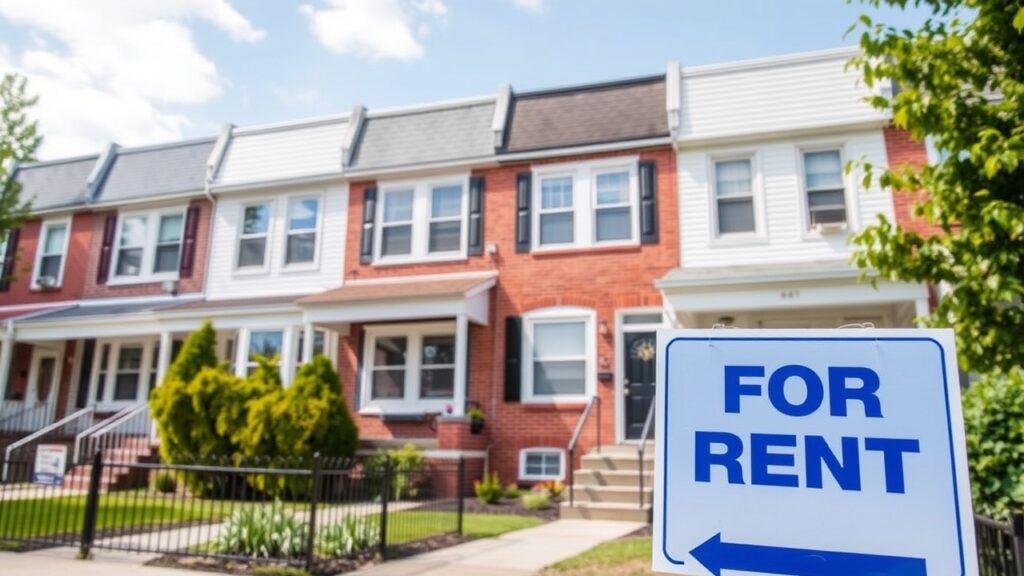
Real estate investment shows its strength in growing wealth. A $100 investment in real estate starting in June 1999 would now stand at $649, while the S&P 500 would have grown to $634. Many investors choose property because it gives steady returns, income, and has less unpredictability.
To understand opportunities in Boston’s real estate market, people need to know the local market trends. Boston has high demand and neighborhoods with unique characteristics offering strong chances to build wealth and benefit from a thriving rental market.
This piece covers everything investors need to know about property investing in Massachusetts. It includes strategies and evaluation methods for real estate investment trusts.
Table of Contents
Understanding Real Estate Investment Opportunities in Boston
“Every person who invests in well-selected real estate in a growing section of a prosperous community adopts the surest and safest method of becoming independent, for real estate is the basis of wealth.” — Theodore Roosevelt, 26th President of the United States, prominent historical leader whose insight applies to investment methods
Why Boston Remains a Strong Market for Property Investing
What makes Boston special compared to other metropolitan areas is the type of economic base the city has. It has Harvard University and MIT, Massachusetts General Hospital, and large biotech companies. These institutions create a lasting demand for housing. This concentration of employers supports low unemployment rates, which stabilized around 3.8% in analyzes done not long ago.
Boston’s Home Price Index increased 118% from 2000 to 2018. This is better than the national average growth of 95% for the same period. As of now, the average price of homes in Boston is between 800,000 to 900,000. Prices for individual family homes have crossed 900,000. Annual price increases for homes is between 3-6% for the Boston area.
The average number of vacant apartments in Boston is below average for the U.S Boston is seeing an increase in rental demand. Certain areas near downtown a the average rate of apartment vacancies is 3.0% or lower. With regard to the 3rd quarter of the year 2024, the average occupancy rate for the city is 96.2% Boston continues to have a steady demand for rentals with the ongoing influx of students, young professionals, and workers in the medical field. Average rent in Boston is $2,869 a month, reflecting a year over year increase of 3.0%, which is higher than the national average increase in rent of 1.0%.
The transaction volume over the past 12 months reached close to $4.30 billion by November 2024. This was a 24% rise compared to the same time last year. In 2024 multifamily sales recorded the fourth-largest total bringing in $3.70 billion from 93 completed transactions.
Types of Real Estate Investment Opportunities Available
If you want an easier way to manage properties single-family rentals can be a good choice. They are simple to handle and attract many renters. On the other hand multi-family homes, like Boston’s well-known triple-deckers, let you earn from several units at the same address. The multifamily market can provide you with better rental profits while keeping management work focused in one spot.
Compared to last year, the condominium prices have increased by more than 10%. These trend provide a positive indication for the potential to earn income and appreciate capital. Mixed-use developments integrate residential use with commercial and or office space. They offer the flexibility to respond to changing market conditions and are designed to maximize profitability.
Real estate investment trusts provide another avenue. Federal regulations require REITs to return 90% of profits to their investors. These vehicles offer more liquidity than traditional property ownership and allow investors to buy and sell shares at any time.
Real estate projects consist of apartment complexes ranging from 50 to more than 300 units, shopping areas with various businesses, office buildings industrial warehouses, and hotels.
Being located right in the middle of the action is worth it for many young professionals choosing their homes in downtown Boston. Those who are at the family-raising stage of life, exchange the metropolitan suburbs, the driven space in the house and the better school opportunities.
Key Differences Between Active and Passive Investing
Active real estate investing means that you’ll have to participate in the investment yourself. This method takes time and money and the risk is yours as well. The amount of effort is similar to a full-time job working for someone else. Some examples of active investing would be wholesaling. This is where investors buy and sell a property and make money off of the contracts and how they get assigned. Another form is property flipping. This is where the investor buys a property off the market for a lower price and then renovates the property and sells it for an immediate profit.
With passive real estate investing, you receive income without dealing with the management of the properties. You can invest in real estate through a method called real estate investment trusts (REIT). This is basically a real estate version of a mutual fund, where you buy in as part of a group of investors. With real estate syndication, you can think of it as a group effort. For these syndications, minimum investments typically run from $50,000 to $250,000. Those who invest in syndication are considered limited partners, meaning they do not have any responsibilities other than the minimum capital contribution.
With real estate funds, investors’ money is pooled together, and the money is strategically divided among several different investment opportunities. The funds are designed to be as flexible as possible, allowing for an indefinite amount of time to invest. The syndications are designed for a set amount of time to invest and a set amount of time to hold the investment. The main difference between a fund and a syndication is the amount of time the syndication sponsors have to manage the weekly distributions of interest as opposed to the time without interest payments that the investor must wait before receiving payments from the fund.
Active investing takes a lot of market time and knowledge and effort but offers complete control is better and has the potential for greater returns. On the other hand, passive investing, means less time and effort is wasted but the returns are lower and control over what is done with the investment are limited. Also, with passive investing, the risks are shared. Unlike active investing, with passive investing, investors are not solely responsible for financing potential problems.
How to Be a Real Estate Investor: Getting Started in Massachusetts
Determining Your Investment Goals and Budget
The SMART method helps you stay on track because goals are supposed to be Specific, Measurable, Achievable, Relevant, and Time-based. For example, in the next two years, you might buy positive cash expenses properties and target passive rental income on $2,500 on a monthly basis.
When planning a budget, your considerations should go beyond just the purchase price. For down payments, you should account for 20-25%, and for closing costs, you should set aside about 2% (which are the costs of titles, mortgage registration taxes, and mortgage registration). With cash reserves for unplanned repairs and vacancies, you will need to set aside cash. For example, if you have $100,000 set aside in savings as your cushion, you will be able to go after properties listed for around $450,000. In Boston, average rents are $4,000 monthly so strong cash flow potential exists.
Understanding Massachusetts Landlord-Tenant Laws
Massachusetts has very regulated laws about landlord-tenant relationships. MGL Chapter 186 governs these rules. Security deposits need particular attention. Landlords are required by law to keep renters’ security deposits in a separate account that earns interest. They must give tenants receipts for their deposits as well as statements showing the interest accrued each year. Landlords must deliver a statement of condition that describes the unit’s existing damage within 10 days of tenancy start or deposit receipt.
Landlords must return security deposits plus interest within 30 days of tenancy end. They can deduct only for unpaid rent or damage beyond normal wear and tear. Entry to rental units needs 24 to 48 hours notice for non-emergency situations. Repair requests need action within 5 days, with completion within 14 days of written notice. Massachusetts tenants can withhold rent or deduct up to 4 months’ rent over any 12-month period for unaddressed repairs under MGL Chapter 111, Section 127L.
Financing Options for Boston Real Estate Investors
Investment property financing is different from primary residence loans. Massachusetts private money loans averaged 10.21% interest rates in Q4 2025 with loan amounts around $1,038,853. Q3 2025 data showed 11.39% average rates with 2.3% origination fees and 58% average loan-to-value ratios. Average loan amounts were $1,200,000.
Hard money loans will fit renovators that engage in rehabs or ground-up building. DSCR loans serve long-term rental investors focused on cash flow. Private lenders like Cardinal Capital Group and RD Advisors provide flexible financing for fix-and-flip, buy-and-hold, refinance and new construction projects. Cardinal originated over $450 million across 200+ deals in 2024. 85% concentrated in the Boston metro area.
Building Your Local Network and Team
You need to assemble trusted professionals for real estate investing success. The core team has an investor-friendly lender with real estate experience who provides market insights beyond funding. The local real estate agents find properties ready to invest in and provide neighborhood-specific information on growth opportunities.
Contractors do not only do emergency fixes on rentals but also value-adding renovations on flips. They need to be dependable. Real estate accountants who understand and are good with numbers deal with portfolio tracking and the bookkeeping side of things. They also streamline the tax process when the holdings grow. Property managers who understand and know the Massachusetts landlord-tenant laws take care of rent collection, maintenance, repairs, and tenant interactions. This allows you to concentrate on growing.
Real Estate Investment Strategies That Work in Boston
Single-Family Rental Properties
Property investors in Boston face a housing shortage projected to take a decade to resolve. This supply constraint creates favorable conditions for single-family rental properties. Families choose renting over buying more often now due to limited resources for down payments, cash flow concerns, or job location uncertainties.
Single-family rentals offer distinct advantages. Families make reliable tenants who care about their living space and stay longer. The market presents a more pleasant business environment compared to the narrow profit margins and fierce competition in multi-unit properties. Properties with at least three bedrooms and an extra bathroom attract stable tenants who stay long-term and reduce turnover costs. Property appreciation provides returns with more control than stock market investments, even during months of negative cash flow.
Multi-Family Properties and Apartment Buildings
Boston’s multifamily market demonstrates remarkable resilience entering 2025. Q4 2024 vacancies stood at 6.5%, with strong absorption of new inventory driven by the region’s stable economy and improving job market. Asking rents for Class B and C properties rose 1.1% year-over-year in Q4 and outperformed Class A properties at 0.5%.
Boston’s high home price-to-income ratio positions the city for long-term multifamily growth, combined with its substantial college and university student pipeline . The total asset sales volume reached $2.00 billion in 2024 [2]. Strong need for existing assets continues as the Boston metro economy attracts consistent corporate investment and job creation.
Real Estate Investment Trusts (REITs)
Investors do not have to take care of managing properties. They have to pay out at least 90% of their taxable income to their investors as dividends, some even pay out 100% of their taxable income this way. Public US REITs have $2.5 trillion out of $4.5 trillion in total gross assets.
Equity REITs earn profit by rental income and capital gains. For income, Mortgage REITs invest in commercial or residential mortgages and/or mortgage backed securities. REITs are also invested in by 170 million Americans because of 401(k)s, IRAs, and pension plans.
House Flipping in the Boston Market
Knowing the market and planning finances is important for house flipping. Investors purchase a house for no more than 70% of the ARV and then take out the repairs. A case in point would be an example of a house whose ARV is $500,000 and repair is 50,000, the highest purchase price would be 300, 000.
Because of Boston’s historic buildings, house flipping is more difficult. Careful consideration has to be made to balance modernization and regulations for preservation. Upgrades in bathrooms and kitchens have the most impact and to avoid high carrying costs, the project needs to be completed quickly.
Commercial Real Estate Opportunities
Boston’s commercial real estate covers numerous sectors. Office buildings need flexibility and shared workspaces to attract tenants. Retail properties benefit from experiential models as the economy reopens. Industrial buildings serving manufacturing and warehousing are the life-blood of the changing e-commerce economy.
Evaluating Boston Properties for Maximum ROI
Analyzing Neighborhood Growth Potential
Identify emerging Boston neighborhoods before real estate prices climb. Finding emerging Boston neighborhoods requires a bit of pattern recognition. The process often begins with a city investment in transit, green space or education. After a new bus or train line gets a route, more people will come to live and work in that area. As a result, many new businesses will pop up, including coffee shops, co-working/pod office space, and boutique fitness studios.
Appreciation is occurring in home and rental properties as values rise above the surrounding market. High-end young professionals are also moving into the neighborhood and with low vacancy rates, heating demand is expected to rise. Upgrades to roadways, public transportation and utilities are very impactful to a neighborhood and may attract young professionals and growing families due to increased housing demand.
Calculating Cash Flow and Cap Rates
Cash flow represents property income minus all costs. These include operating expenses, mortgage payments and reserves. Many investors think about $100 to $200 per month per unit a solid standard. Cap rate equals net operating income divided by purchase price. $80,000 NOI on a $1,000,000 purchase yields an 8% cap rate, for example].
Better valuation and lower risk typically come with lower cap rates. Higher cap rates suggest greater risk. Properties in high-traffic areas command higher cap rates. Calculate NOI by subtracting insurance premiums, property taxes, repairs, maintenance, management costs and marketing from rental income.
Understanding Boston’s Property Tax Structure
Boston’s FY25 residential tax rate stands at $11.58 per thousand dollars of property value. Commercial rates reach $25.96. Property values increased $5.50 billion in FY25 and totaled $226.40 billion. Residential taxpayers account for 44% of the total levy. Commercial and industrial properties comprise 56%.
Proposition 2½ constrains annual property tax levy increases to 2.5% over the previous year. Recent residential tax increases hit 13% year-over-year. Homeowners paid an average $780 more annually.
Tenant Screening for Boston Rentals
Massachusetts prohibits landlords from charging rental application fees, though brokers may collect them. Detailed screening has credit reports revealing payment history and bankruptcies, employment verification suggesting job stability, rental history showing payment patterns and criminal background checks. Landlords must get written consent via a CORI Acknowledgement Form before accessing Criminal Offender Record Information.
Request recent paystubs and contact both current and previous landlords to verify consistency. Ask about lease violations, cleanliness, rent payment punctuality and willingness to re-rent.
Property Management Considerations
Location remains paramount in real estate investments. Properties near strong job markets, quality schools and growing populations attract reliable tenants. Professional property managers handle tenant screening, rent collection, maintenance and legal compliance. Management fees typically run 6-10% of monthly rent but save time and money, especially for properties that are geographically dispersed.
Ready to put your Boston real estate investment to work? Partnering with an experienced property management team is one of the smartest moves you can make as an investor. Green Ocean Property Management handles the day-to-day so you can focus on growing your portfolio. We cover tenant screening, lease management, maintenance coordination and financial reporting. Learn more about our professional property management services in Boston and take the next step toward maximizing your investment returns.
Real Estate Investing Tips for Wealth Building
“Real estate cannot be lost or stolen, nor can it be carried away. Purchased with common sense, paid for in full, and managed with reasonable care, it is about the safest investment in the world.” — Franklin D. Roosevelt, 32nd President of the United States, key figure in economic policy and housing initiatives
Varying Your Investment Portfolio
You reduce exposure to single-market downturns when you spread investments across property types. U.S. Census Bureau data shows that over 70% of American real estate investors own more than one property type. Balance comes from combining residential rentals for stable cash flow with commercial properties that offer higher income per lease. Geographic variation protects against local economic changes and regulatory shifts. Boston investors might blend South End condos with suburban multi-families and Worcester commercial spaces.
Utilizing Tax Benefits and 1031 Exchanges
Section 1031 exchanges allow investors to defer capital gains tax when selling investment property and reinvesting proceeds in like-kind real estate. This strategy can save approximately 40% on tax bills when net gains occur. Any business or investment real estate qualifies, from rental homes to commercial buildings. Investors can exchange indefinitely over a lifetime. Heirs receive stepped-up basis at death, which potentially eliminates capital gains liability.
Avoiding Common Investment Mistakes
Overleveraging remains a critical error, especially when you have interest rates that exceed 7%. Investors face reduced cash flow and default risk without detailed financial planning. Expenses beyond mortgage payments strain profitability when underestimated. Emotional attachment to properties clouds judgment and leads to overpaying. Skipping market research on neighborhood trends and rental yields produces poor investment choices.
When to Scale Your Real Estate Portfolio
Current properties must generate consistent returns with reliable management systems in place before scaling. Measurable targets such as adding three rental properties within 12 months should be established. Utilize equity from existing properties through refinancing, but maintain healthy loan-to-value ratios. Balance income-generating assets with high-growth opportunities when you vary your holdings. Regular portfolio reviews help rebalance holdings and adapt to changing markets.
Conclusion
Real estate investment in Boston offers exceptional wealth-building potential through various strategies, from multi-family properties to REITs. The market’s strong fundamentals support consistent returns when investors approach opportunities with proper evaluation, financing and legal knowledge. Success depends on understanding neighborhood dynamics, calculating accurate cash flow and maintaining compliance with Massachusetts regulations.
Investors benefit from assembling the right team whether they pursue active flips or passive rental income. Professional property management transforms complex landlord responsibilities into optimized operations. This maximizes returns and minimizes headaches. Ready to take your Boston real estate investment to the next level? Partner with Green Ocean Property Management and let experienced professionals handle tenant screening, maintenance coordination and compliance so you can focus on portfolio growth.
Sorry, we couldn't find any posts. Please try a different search.
Experience exceptional management and elevate your property with us