
Software Selection Checklist for Small Landlords
Compare property management software for small landlords by workflow, total cost, support, and data portability. Includes a Boston-area selection checklist and current vendor pricing sources.
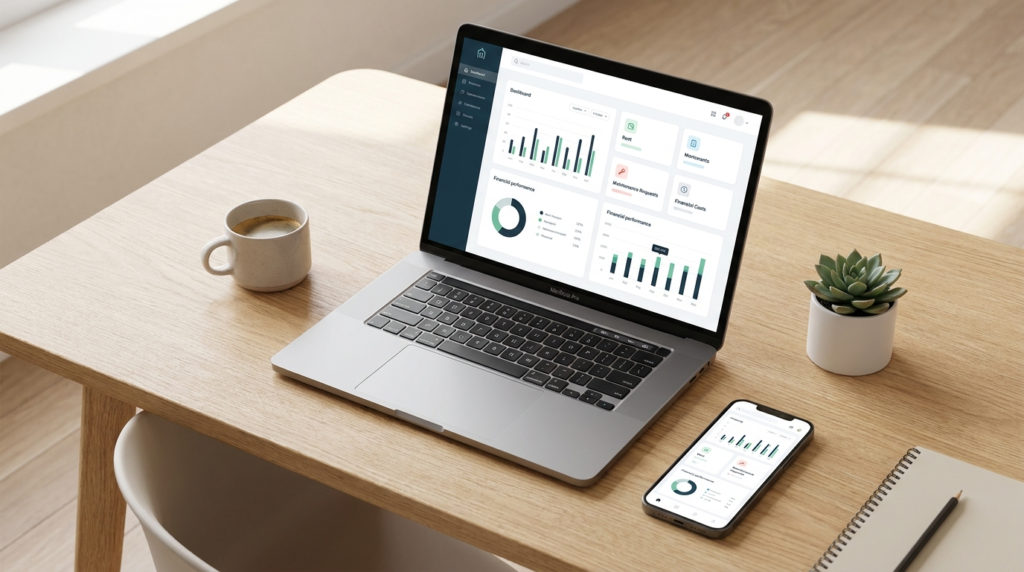
Short answer: Property management software for small landlords can bring rent collection, leases, maintenance requests, tenant communication, and rental records into one system. Choose by the work you need to manage, the full cost for your unit count, the quality of support, and how easily you can take your data with you.
For a Boston-area owner, the key decision is whether a platform helps you self-manage rentals or whether you want a management company to provide both the software and the people who do the work. Software can organize tasks; it does not itself inspect a Boston property, dispatch a contractor, or manage a tenant relationship.
This selection checklist compares practical needs, data portability, support, and total cost. Vendor prices and plan details below were checked on October 30, 2026; confirm current terms directly with each provider before subscribing.
Table of Contents
What does property management software do?
Rental property software gives landlords a shared place to track tenant and lease information, collect or record rent, coordinate maintenance, store documents, and review income and expenses. Some systems add rental listings, applications, screening, electronic signatures, accounting, integrations, or performance dashboards. Features vary by provider and plan.
Property management software selection checklist
- Start with your properties and workflow. List your rental units and property types, who will use the system, and the tasks you repeat each month. A landlord managing one or two units may need rent records, document storage, and maintenance requests. A larger or mixed portfolio may need reconciled accounting, multiple user roles, owner reporting, integrations, or commercial tenant tools.
- Separate must-haves from add-ons. Test rent collection, lease and document management, maintenance tracking, tenant communication, and income/expense reporting first. Add screening, vacancy marketing, inspections, e-signatures, tax exports, or automation only if they solve a real workflow problem.
- Calculate the full cost for your unit count. Compare monthly and annual subscription costs, minimum-unit or minimum-spend rules, payment-processing and screening fees, onboarding or migration charges, add-ons, and fees charged to tenants. Ask the vendor to show the total for your portfolio in writing.
- Test accounting and reporting with a real example. Check whether the system separates income and expenses by property, handles your chart of accounts, records fees correctly, and exports reports your accountant can use. Confirm which tasks still require manual bookkeeping; a dashboard is not a substitute for reviewing the underlying records.
- Check maintenance from request to closeout. Confirm tenants can submit a request, attach photos, receive updates, and see status. Check whether the landlord can assign a vendor, record approvals and costs, and export a maintenance history. Ask whether emergency response or contractor dispatch is included or must be arranged separately.
- Ask how your data gets out. Before signing up, find out how to export leases, tenant records, transactions, documents, and maintenance histories; which formats are available; whether exports are available without support; and how long data remains accessible after cancellation. Run a sample export before you depend on the system.
- Evaluate support and onboarding. Ask what support is included in your plan, when people are available, typical response channels, and whether setup or migration costs extra. Contact support with a real question before committing, and test the product with sample data or a trial.
- Review security and integrations. Look for individual user accounts, role-based access, multi-factor authentication, clear data-retention terms, and documented integrations with the services you already use. Avoid sharing logins between users. Confirm that a listed integration works on your selected plan.
- Test the mobile experience. Try the common tasks on a phone: checking a rent entry, answering a tenant, opening a lease, and updating a repair request. A mobile app matters only if it makes those tasks usable for you and your tenants.
How much is property management software?
Pricing may be a flat monthly subscription, a per-unit charge, a free base plan with transaction fees, or a custom quote with minimums. The headline price is only part of the cost. Compare the recurring fee plus payment processing, tenant screening, setup, data migration, add-ons, and any minimum commitment.
- Innago: advertises no monthly platform subscription. Its FAQ says transaction fees may apply to online payments or screening; confirm who pays each fee and the current rate.
- TenantCloud: Starter is $18/month, Growth $35/month, and Pro $60/month on monthly billing. Lower per-month rates are shown with annual billing. Compare lease limits, accounting features, screening and payment costs, and whether you need a higher plan.
- Buildium: Essential starts at $65/month, Growth at $202/month, and Premium at $420/month. Ask how the plan fits your unit count and whether payment, onboarding, or other service charges change your total.
- AppFolio: Core starts at $1.49 per unit/month; its published pricing page says a 50-unit minimum and minimum spend apply. Confirm the minimum spend and plan requirements; that unit minimum may rule it out for a very small portfolio.
These are provider-published snapshots, not independent price guarantees. Plans and fees can change. Verify the current offer and calculate the total for your own properties before choosing.
Is free property management software enough?
A free or no-subscription option may cover the basics for a small self-managed portfolio, but “free” does not always mean every workflow has no cost. Check payment and screening fees, feature limits, support, data export, and whether the plan includes the reports you need. If the software saves little time or forces manual work elsewhere, compare the total operating cost with a paid plan.
What software do property managers use?
There is no single platform that fits every landlord or property manager. Options differ in pricing, supported property types, accounting depth, maintenance workflows, integrations, and support. Use the same checklist and sample tasks for every demo instead of selecting a platform solely because it appears in a “top software” list.
What should Boston landlords consider?
For Greater Boston rentals, test the actual workflow you need: who receives a tenant’s request, who can coordinate an on-site visit, how contractor costs are recorded, and how you review activity across the properties you own. If you own rental units and want a team to handle leasing, rent collection, and maintenance coordination, compare that managed service with self-managing through a software subscription. They are different options: one provides a tool, while the other provides people and operating services as well.
Green Ocean Property Management provides rental management services for Boston-area owners. See the Boston rental property management service to review what the team handles.
Related landlord accounting guides
- What is a rental ledger and why should you have one?
- Four tips for rental property accounting records
Sources checked October 30, 2026
- Innago FAQ and pricing information
- TenantCloud plans and pricing
- Buildium plans and pricing
- AppFolio plans and pricing
Vendor plan details are subject to change. This article is a software-selection guide, not legal, tax, or financial advice.
Want help with the work behind the software?
If you would rather delegate rental operations, talk with Green Ocean about its Boston property management services. Request a rental quote or review management pricing.

Lead Paint in Massachusetts: How Deleading Affects Your Family’s Health
Back in 1978, lead, a metallic substance, was added to paint. It was added because it made paint brighter and more durable. In this article, you will understand how this material that makes our places more beautiful can also affect our health particularly the children. In Massachusetts, a Letter of Interim Control lets an…
Effective Communication Strategies for Landlords and Tenants
A successful landlord-tenant relationship hinges on clear and consistent communication. Just like a strong bridge connects two points, effective communication allows both parties to feel heard, understood, and confident in their roles. When communication breaks down, misunderstandings arise, and minor issues can escalate into major conflicts. Let’s explore strategies to build a communication bridge that…

How Real Estate Analytics Gets Done
Analytics enables businesses to make sound decisions based on facts and trends. It often means a lot of spreadsheets: a lot of numbers, a lot of reading. But when it comes to an investment property, it’s important to use this data. Read on to know how real estate analytics gets done. Our…
4.9 stars on 1,000+ Google reviews. Managing Boston property since 1977.